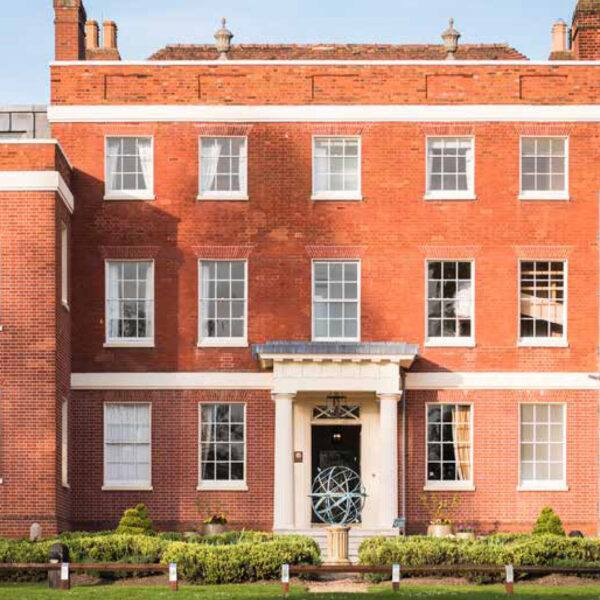
Our Net Zero luxury holiday rental property, Warksburn Old Church, is located in Wark-on-Tyne, in beautiful rural Northumberland, and is proudly marketed as the place ‘where style and sustainability meet’.
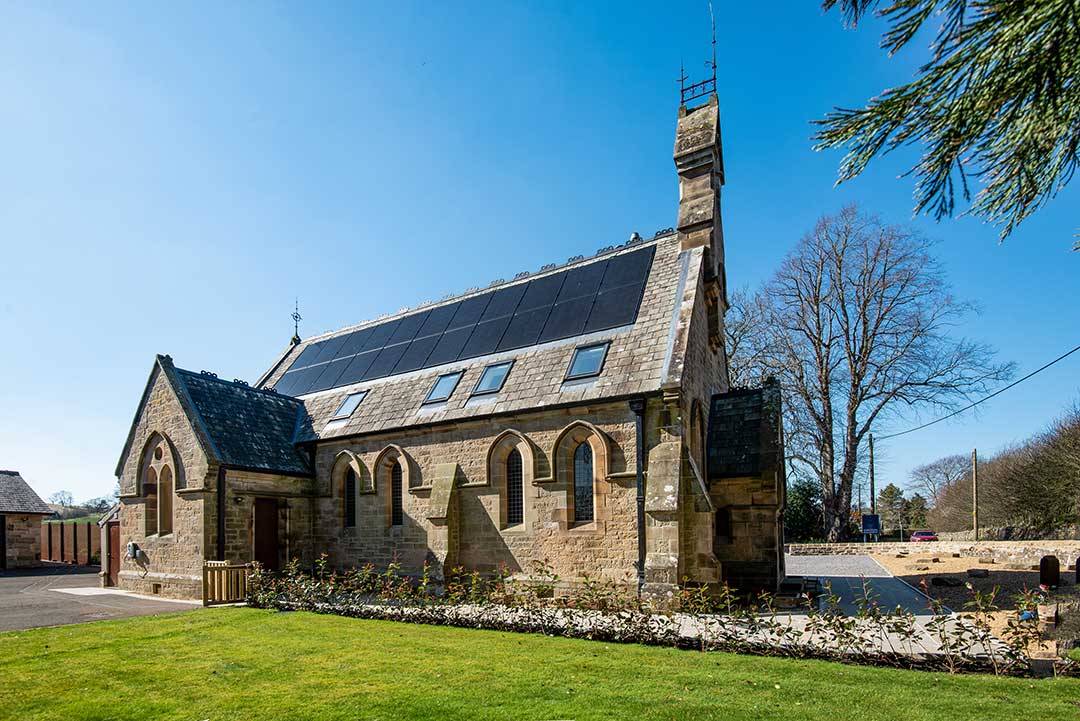
We transformed a redundant church into one of the most energy efficient buildings in the UK, exporting more energy than it consumes over the course of a year. It is also the first church-to-home conversion anywhere in the world to meet the demanding Passivhaus standard for energy efficient buildings.
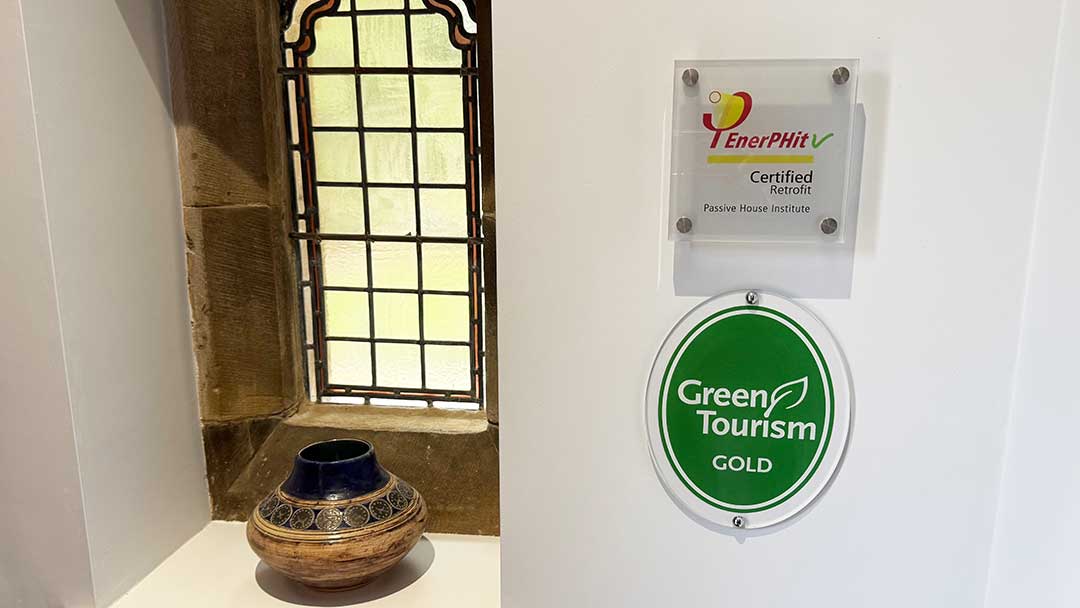
We were delighted to secure a Green Tourism Gold Award in December 2024. This independently-validated recognition has been hugely valuable for our business; a globally recognised benchmark assuring guests and partners that sustainability is at the heart of our business.
Our journey began in May 2023 with a bone-chillingly cold and draughty Victorian relic. It took plenty of hard thinking, hard work and hard cash to deliver an 18-month renovation, creating a stunning home for our guests. We are delighted with the result and, more importantly, our guests love it too. They often tell us their stay has exceeded expectations and opened their eyes to how energy use and carbon emissions might be reduced in their own homes.
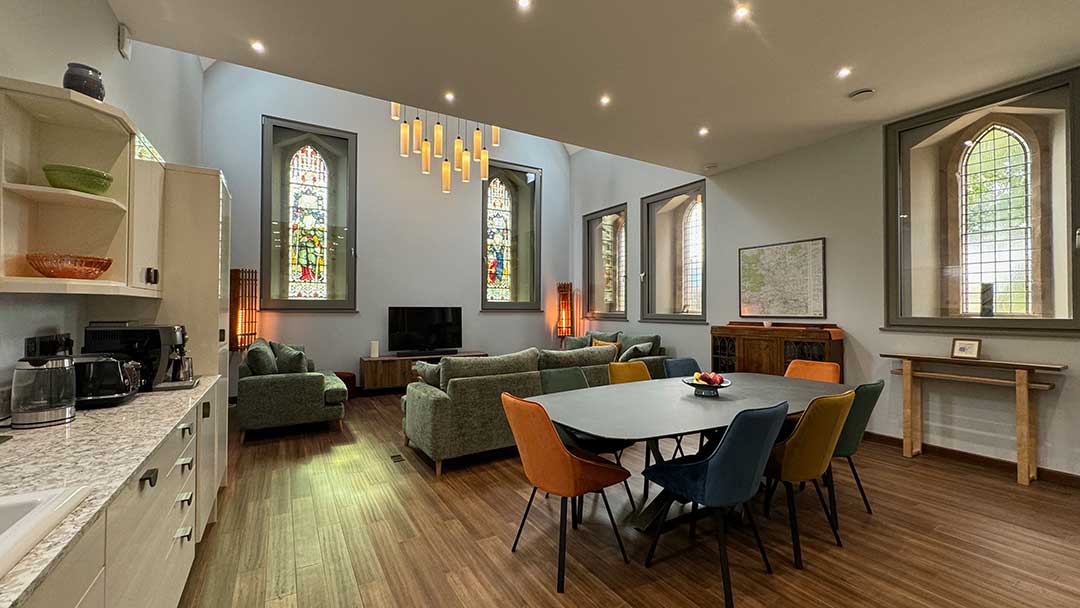
That is what makes us happiest: we created Warksburn Old Church to be an inspiring and informative place to stay; unashamedly luxurious and radically low carbon. A place which shows how style and sustainability can be combined, and how state-of-the-art low carbon technology can work in a historic structure.
So what motivated us to transform a profoundly inefficient building into a ‘deep green’ beacon project?
Firstly, we already had good knowledge of renewables and decarbonisation from work on our own home. Secondly, the church – made redundant in the early 2020s – was literally on our doorstep.
Since 2002, we have lived in the former Manse (minister’s house) next door. Built in 1875, it sits alongside the Presbyterian church at the entrance to Wark-on-Tyne, a few miles from Hadrian’s Wall, Hexham and Kielder Forest.
For over 20 years, we watched the church slowly decline as the congregation dwindled and maintenance became unaffordable. Yet one feature stood out: its south-facing roof, steeply pitched at 54 degrees. With our own smart energy system in mind, we often thought how much energy it could generate.
When the church agreed to sell us the property in 2021, we finally got the chance to answer that question. More importantly, we had a once-in-a-century opportunity to ask how little energy the building would consume if we designed the renovation to Passivhaus standard.
The Info page on the website has a wealth of information about the property, or you could watch the Derelict Rescue TV documentary about the rebuild, but here’s a brief summary:
- A nearly one-metre thick floor largely composed of Geocell insulation, preventing heat loss and water ingress.
- A new internal timber-framed structure with 180-250mm insulation and an airtight membrane, supporting super-insulated triple glazed windows installed inside the original stained glass.
- A Mechanical Ventilation Heat Recovery (MVHR) system capturing over 90% of heat from outgoing air. For most of the year, internal heat from occupants and activities is sufficient, with infrared ceiling heating used only as top-up in winter.
- A Waste Water Heat Recovery (WWHR) system capturing heat from shower water to pre-warm incoming cold water.
- A south-facing solar array generating around 8.50 MWh a year, around 85% of the building’s 10.06 MWh annual consumption, covering all its energy uses: heating, hot water, cooking, lighting and anything else our guests use power for.
- Battery storage enabling daytime solar use after sunset, plus off-peak green grid electricity via a REGO-backed tariff.
- Smart energy management allowing us to store cheap or surplus renewable energy and export at favourable rates, resulting in 12.2 MWh annual exports (120% of consumption). In 2025 this produced a net energy benefit of £1067 – effectively paying us £2.92 per day. This means the entire business operates on a Net Zero (and at times net positive) energy basis.
This investment laid the foundation for our Green Tourism Gold Award, but that is only part of the story. The assessment also reviewed how sustainability runs through our wider business across People, Place and Planet, aligned with UN Sustainable Development Goals.
Engagement with Green Tourism is ongoing, supported by our partner Visit Northumberland. We look forward to continuing to improve our sustainability performance and helping establish benchmarks such as negative CO2 per bed night, sharing best practice across the industry.
This commitment was also a key factor in being named Best Self Catering Accommodation in the North East of England at the 2026 North East England Tourism Awards, where judges praised our “active approach to sustainability” and “fully net zero carbon emissions”.
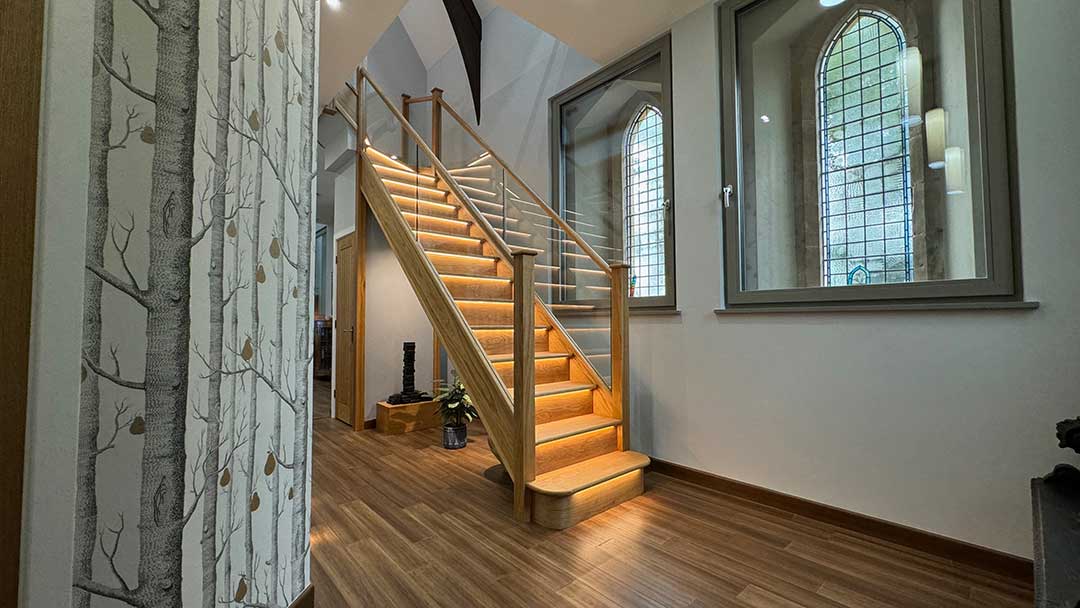
Ultimately, though, it’s not about certificates or awards, it’s all about guest experience. We would love to welcome you for a stay at Warksburn Old Church. Come and experience Net Zero Luxury for yourself: visit https://warksburnoldchurch.com/book and use code GT10 for 10% discount off direct bookings.
While our journey with this remarkable building began just a few years ago, the church’s green story actually began with an extraordinary vision of renewable energy dating back to the 19th century, and the church’s original benefactor, Sir George Barclay Bruce, who funded its construction in 1875.
Barclay Bruce started his career apprenticed to Robert Stephenson, builder of Stephenson’s Rocket, perhaps the most important single machine in history and the spark that ignited the Industrial Revolution. Bruce later became President of the Institution of Civil Engineers. In his Presidential Address to the Institution in 1887, he said:
“Electricity is to us now light, heat, and power… and when we shall have learnt the way of storing up… the winds and streams and tides… then it will become a factor in the world’s life compared with which the present is as nothing.”
These words are among the earliest recognitions of renewable generation and storage of electricity. It is remarkable that we have been able to realise this vision in the very building he helped create.
To bring the story full circle, Westminster College Cambridge holds a portrait of Sir George depicting him with the architect’s sketch of this very church. With their permission, the portrait now hangs in our entrance hall, welcoming guests to a globally unique, green-powered home – one that reflects a vision first imagined more than a century before its time.
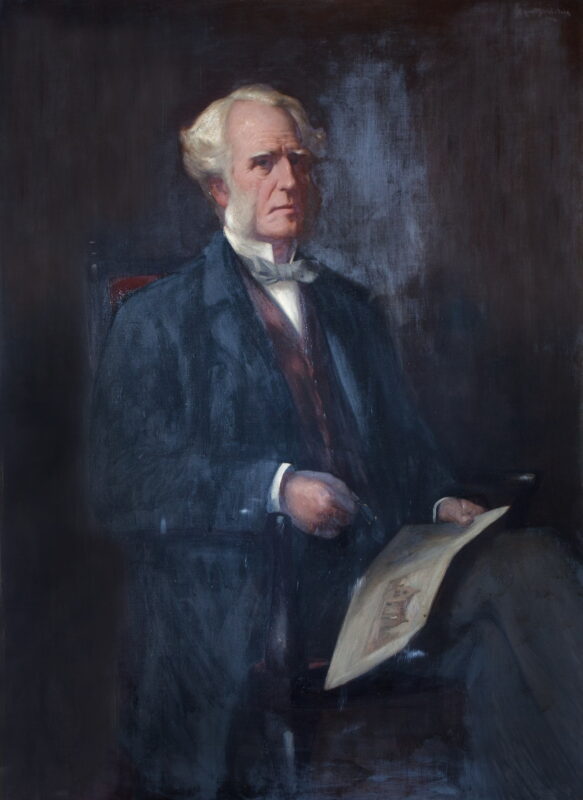
Portrait of Sir George Barclay Bruce by kind permission of Westminster College Cambridge