Back in 2021, we featured the sustainability story of Dowfold House Bed & Breakfast, where an annual abundance of apples inspired a partnership with a local charity to reduce food waste while supporting the local community. Five years on, owners Jill and Rupert have shared an update on how their sustainability journey has evolved. From serving guests apple juice made from their own orchard to producing homemade preserves and adapting their gardens to cope with hotter, drier summers, their story is a wonderful example of how small ideas can continue to grow over time.
From surplus apples to a local success story
Have you noticed how fruit and vegetable gardens are often centres of feast and famine? For a few weeks each year we’re inundated with produce – from apples to courgettes and everything in between – and then… nothing.
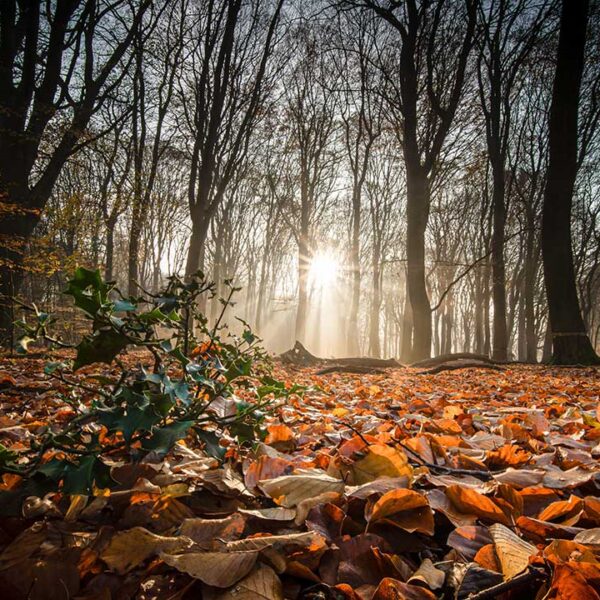
Here at Dowfold House, our biggest challenge has always been our small orchard of mature trees, including three apple trees. In a good season they can produce around 400kg of apples. We know because we’ve actually weighed them! Of course, occasionally we get none at all, as one late frost can wipe out the blossom and leave us completely apple-less.
Over the years we’ve tried everything. We’ve carefully stored the perfect fruit, made as much apple compôte as our freezers could hold, baked endless apple crumbles and given bags of apples away to guests and neighbours. Even then, far too many still went to waste.
Everything changed when we discovered the North East Autism Society (NEAS), who process surplus apples into delicious apple juice. Their project gives meaningful employment opportunities to autistic people while ensuring locally grown fruit is put to good use rather than being wasted.
Five years on…
The partnership with NEAS is still going strong. Today we’re able to specify – and label – that the apple juice we buy back from NEAS has been made using our own apples. We purchase several dozen bottles every year and serve it at breakfast, where it’s become a real favourite with our guests. In fact, many guests enjoy it so much that they buy bottles to take home, either to enjoy themselves or to give as gifts to friends and family.
NEAS also sell their apple juice through local markets as well as through annual county shows like the Wolsingham Show. They also sell juice to local farm shops and offer a drop and production option for people who wish to have their own apples juiced.
We’ve also pruned our apple trees (which only seems to make them produce even more fruit!) and are now exploring whether NEAS could process our surplus pears as well.
Homegrown produce for our guests
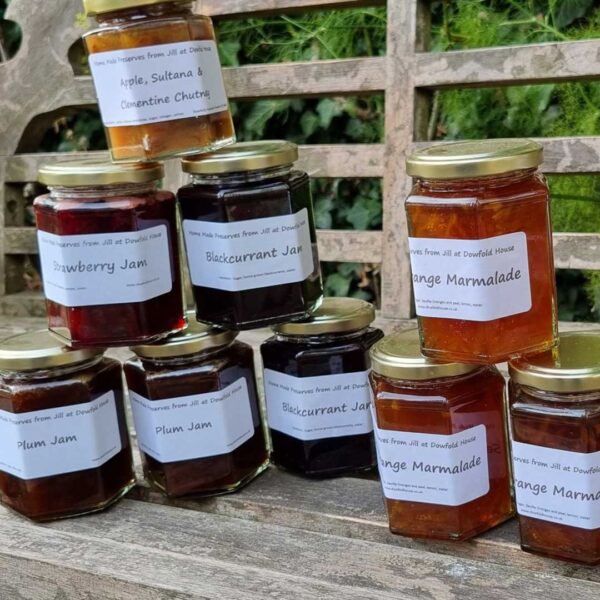
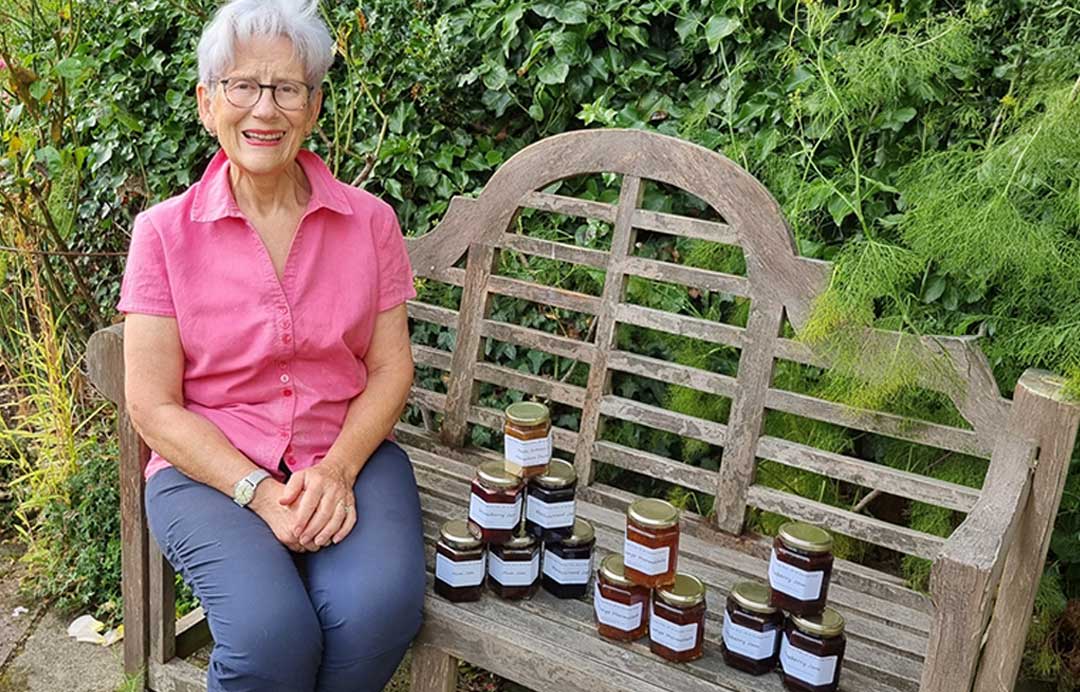
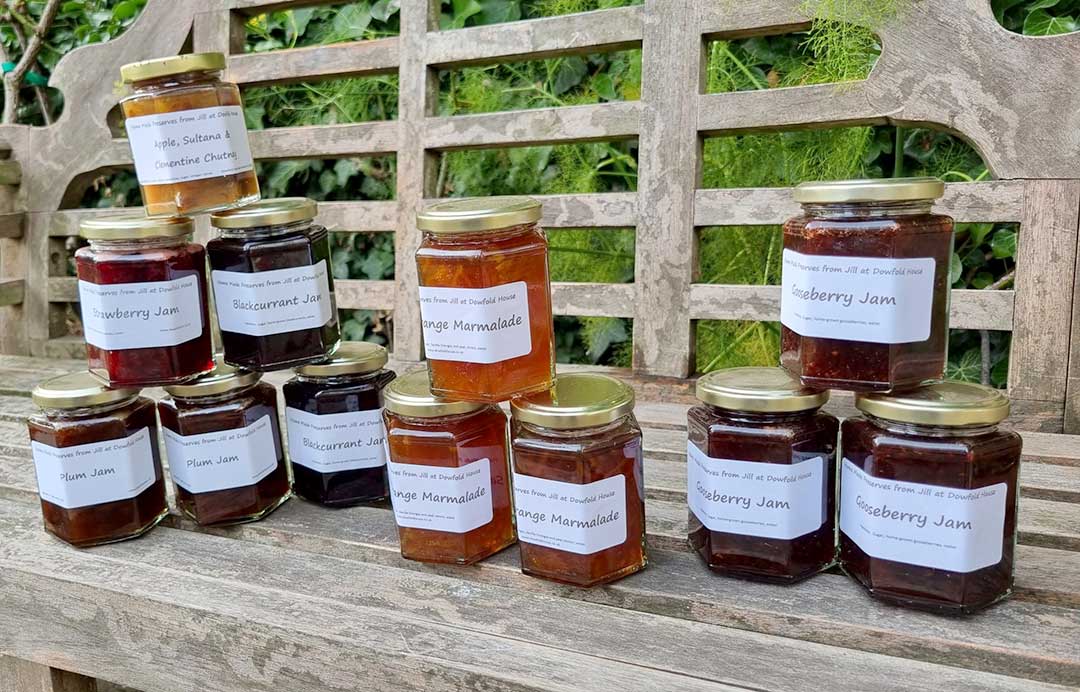
Alongside the orchard, our homemade preserves continue to flourish. Jill’s green fingers produce an abundance of soft fruit throughout the year, allowing us to make around 100 jars of jam annually. Our favourites include strawberry, raspberry (both red and yellow), blackcurrant, redcurrant, plum and gooseberry, alongside newer combinations such as raspberry and redcurrant, which have proved especially popular. Our homemade apple chutney is another guest favourite.
While we don’t have an orange tree for marmalade, our local greengrocer, Cunninghams, keeps us well supplied with Seville oranges. We do have a lemon tree, although the North East isn’t exactly renowned for its citrus-friendly climate! On the rare occasions it bears fruit, the lemons provide the perfect garnish for our smoked salmon and crêpe breakfasts.
All of our jams and chutneys are served to guests and are also available to purchase, with many visitors taking a little taste of Dowfold House home with them.
Preparing for a changing climate
One of our newest challenges has been adapting to the increasingly hot, dry summers.
The scorching weather this July pushed our rainwater-only garden watering system to its limits. All 13 of our water butts ran dry before finally beginning to refill.
Rather than switching to mains water, we’re now looking at how many more water butts we can install to help protect our fruit and vegetable crops during prolonged dry spells. It’s a simple step, but one that we hope will make our gardens more resilient as the effects of climate change become more noticeable.
Back in 2021, our focus was on finding a sustainable home for our surplus apples. Five years later, that partnership continues to thrive, our homegrown produce has expanded, and we’re continuing to find new ways to reduce waste, support our local community and adapt to a changing climate.
We’re proud of how our sustainability journey has evolved and look forward to seeing where it takes us next.
Dowfold House’s story is a fantastic reminder that sustainability isn’t about one big change; it’s about continually building on good ideas. By making the most of homegrown produce, supporting a local social enterprise and adapting to changing environmental conditions, they’ve shown how small actions can create lasting benefits for guests, the community and the environment.
We’d like to thank Jill and Rupert for sharing this five-year update, and we look forward to hearing what comes next in their sustainability journey.